



In a business where results are built over time, and decisions involve significant investments and complex responsibilities, the balance between empathy and firmness becomes essential.
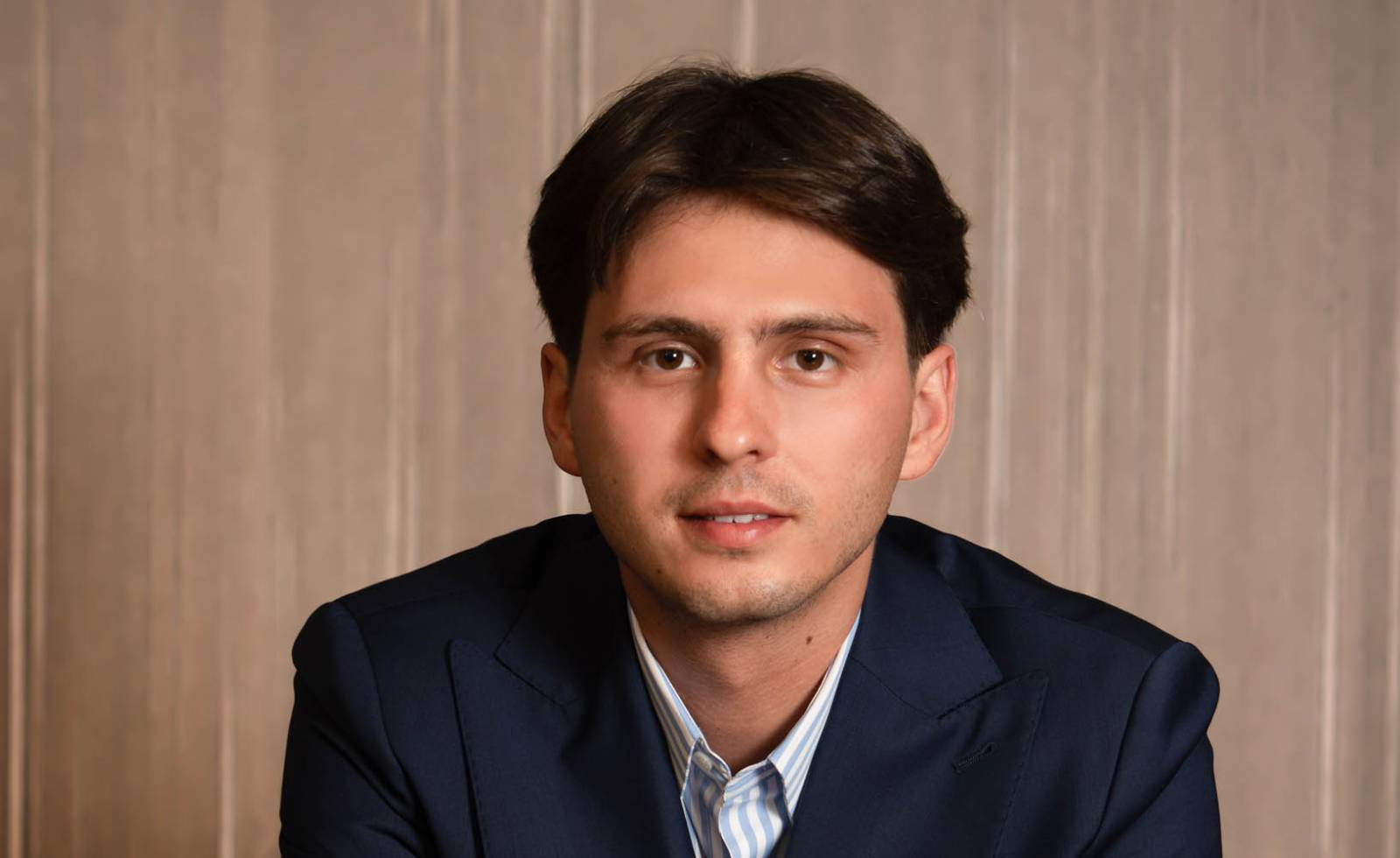
Mihnea Bradu, Chief Operating Financial Officer Cloud9, tells us how this philosophy is reflected both in the way of leading teams and collaborating with partners, as well as in the development of Cloud9 Evolution, a project of approximately 170 million euros that aims to go beyond the boundaries of a residential complex and meet the needs of a community in the long term.
How is power in leadership redefined today: is the position still sufficient or influence is gained through empathy and trust?
I believe that we are witnessing a profound redefinition of the way we understand power in leadership. The position gives you formal authority and the legitimacy to make decisions, but it does not guarantee your influence and, even less, the ability to mobilize people around a common direction. On the other hand, high-performance leadership presupposes, first of all, a deep understanding of the business and the ability to make decisions, including when the context is difficult or the information is incomplete. I believe that the difference between a manager and a leader is given by the latter’s ability to transform the decision into a direction that people understand and choose to adhere to. This is where empathy, dialogue and transparency come in. Not as signs of vulnerability, but as tools through which you build cohesion and responsibility in the organization.
In real estate, this dimension of leadership is all the more important as we are talking about projects with long development horizons, significant investments and a complex ecosystem of partners. At Cloud9, we see this responsibility concretely in the development of Cloud9 Evolution. It is a project of approximately 170 million euros, developed in two stages, which involves not only operational coordination, but also financial discipline, rigor in execution and a high degree of predictability. In such a project, leadership does not only mean setting the direction, but creating the framework in which many people and partners can perform coherently around the same direction.
How can a leader be simultaneously empathetic and firm without empathy being perceived as a lack of authority?
I do not believe that empathy and firmness are two contradictory attributes. On the contrary, I believe that authentic leadership implies the ability to integrate them in a balanced way. A leader’s authority is not diminished by his ability to understand people, but is often strengthened precisely by this understanding.
Empathy means, above all, the ability to identify and understand the needs, motivations and perspectives of those around them. Firmness, on the other hand, implies clarity in setting goals, consistency in decision-making and taking responsibility for results. The two must work complementary. A leader can listen, understand and adapt the way he approaches a situation, without compromising on the principles and standards assumed.
In fact, I believe that empathy should not be seen exclusively as an interpersonal competence, but also as an essential component of organizational culture and the way you build a business. It is an approach that is also found in Cloud9’s philosophy. From the conceptualization stage of projects, we start from an in-depth understanding of people’s needs, analyzing not only their current expectations and behaviors, but also how they will evolve in the future. Thus, we do not refer exclusively to what the market demands today, but we try to anticipate what quality housing will mean in five, ten or even more years.
This perspective is also reflected in the development of Cloud9 Evolution, where we set out to build more than a residential complex, integrating educational facilities, services, green spaces and infrastructure that meet the real needs of a community, including in the long term. At the same time, translating such a vision into reality requires a lot of managerial rigor. At Cloud9 Evolution, we manage two stages at different stages of development in parallel: the first stage is approaching delivery, while the second stage is advancing in execution. A project of this magnitude requires operational discipline, coordination between teams and partners and consistency in complying with quality standards, deadlines and commitments.
After all, I believe that high-performance leadership requires empathy in understanding people and their needs, but firmness in making decisions and pursuing goals. It’s not about choosing between the two, but about the ability to turn this complementarity into an advantage for the organization.
In a time of crisis or uncertainty, what concrete behaviors of the leader help the team to recover — not just to resist?
I believe that true leadership capacity is best seen in times of uncertainty. When the context becomes difficult, the role of the leader is not to pretend to have all the answers, but to turn complexity into a direction that the organization can understand and follow. In such moments, people need, above all, clarity and a sense of stability. It is important to delimit very well what you cannot control from what depends on the organization and to focus the team’s energy on the second level. Set priorities, explain the reason for decisions and create a framework where people know what they have to do and, above all, why they do it.
Consistency is equally important. In a volatile context, the temptation to react to every change is very high. Teams become resilient when there is continuity and when they see that decisions are made rigorously, not under the impulse of momentary pressure.
In real estate, we have gone through a number of pressures in recent years, from inflation and rising construction costs to high interest rates and fiscal uncertainty. At Cloud9, we responded to this context with a very rigorous financial and operational discipline: phased planning, careful cost control, a balanced financing structure and solid partnerships. The objective was to reduce the project’s exposure to external volatility as much as possible and to preserve the predictability of development.
I think that’s where the difference between weathering a crisis and coming out of it stronger comes in. Resilience doesn’t just mean the ability to absorb pressure, but the ability to maintain the organization’s cohesion, trust, and ability to execute. And the leader has an essential role in this process: to provide direction when the context is unclear, to take on difficult decisions, and to remain visible and present exactly when the organization needs leadership the most.
How important is it for a leader to show their vulnerability and where is the border between authenticity and transmitting anxiety to the team?
I believe that a leader must be able to say “I don’t know” or “we don’t have all the answers yet”. I don’t believe in the image of the leader who has to appear permanently infallible. Vulnerability can generate a lot of trust when it is accompanied by assumption. There is a big difference between saying “we don’t have the answer yet, but we are analyzing the options and we will make a decision by moment X” and simply transmitting your own fear to the organization. This is where I think the border lies. The team should not receive the leader’s anxiety, but the reality of the situation and a framework in which it can act.
In my case, in a position with financial and operational responsibility, you don’t always have certainties. You work with scenarios, risks and variables that you don’t control. The important thing is to be transparent about them, without transferring the burden of the decision to the team. Authenticity doesn’t mean verbalizing every doubt. It means not pretending to have certainties when they don’t exist and, at the same time, taking responsibility for deciding.
What do experienced leaders need to “unlearn” in order not to turn past successes into a brake on the future?
I think one of the most dangerous sentences in a company is “this is how I always did it and it worked”. Experience is extremely valuable, but only if you use it as a basis for analysis, not as an argument to automatically repeat the same decisions.
The market is changing, customers are changing, technology is changing the way we work, and what worked very well ten years ago may no longer be relevant today. We see this very clearly in residential as well. The buyer no longer exclusively analyzes the area, price and location. He looks at energy efficiency, facilities, services, community, housing flexibility and developer predictability. Cloud9 Evolution was designed precisely from this change. We have integrated a hectare of green spaces, commercial areas, sports and wellness and we are investing 3 million euros in an educational unit. Not because they were part of the classic recipe of a residential project, but because people’s needs have changed.
I believe that an experienced leader must keep the discipline accumulated over time, but give up the belief that experience automatically gives him the right answer for the future.
How can a leader adopt technology and AI fast enough while maintaining the organization’s values and direction?
I think the first thing is not to treat AI as a goal in itself. We don’t have to introduce technology just to be able to say that we are using technology. The right question is: what problem does it solve, what process does it improve, and what decision does it help us make better?
AI can process very large volumes of information, automate repetitive tasks, identify patterns and help us work faster, but the responsibility for the decision must remain with the people. Leadership involves judgment, ownership and the ability to understand the consequences of a decision, and these cannot be outsourced to an algorithm.
At Cloud9 we already have an approach where technology must bring concrete utility – we integrate smart home systems, smart climate control and energy efficiency solutions. Technology makes sense to us when it produces a measurable benefit for the user: more comfort, more efficient consumption or better control over the home.
The same logic should be applied to AI in organizations. We use it to eliminate activities that consume people’s time unnecessarily and to better substantiate certain decisions, not to eliminate human discernment. I believe that the leader of the future will not be the one who knows how to use the most AI tools, but the one who knows where technology creates value and where humans must remain in control.
Source: Revista Biz
